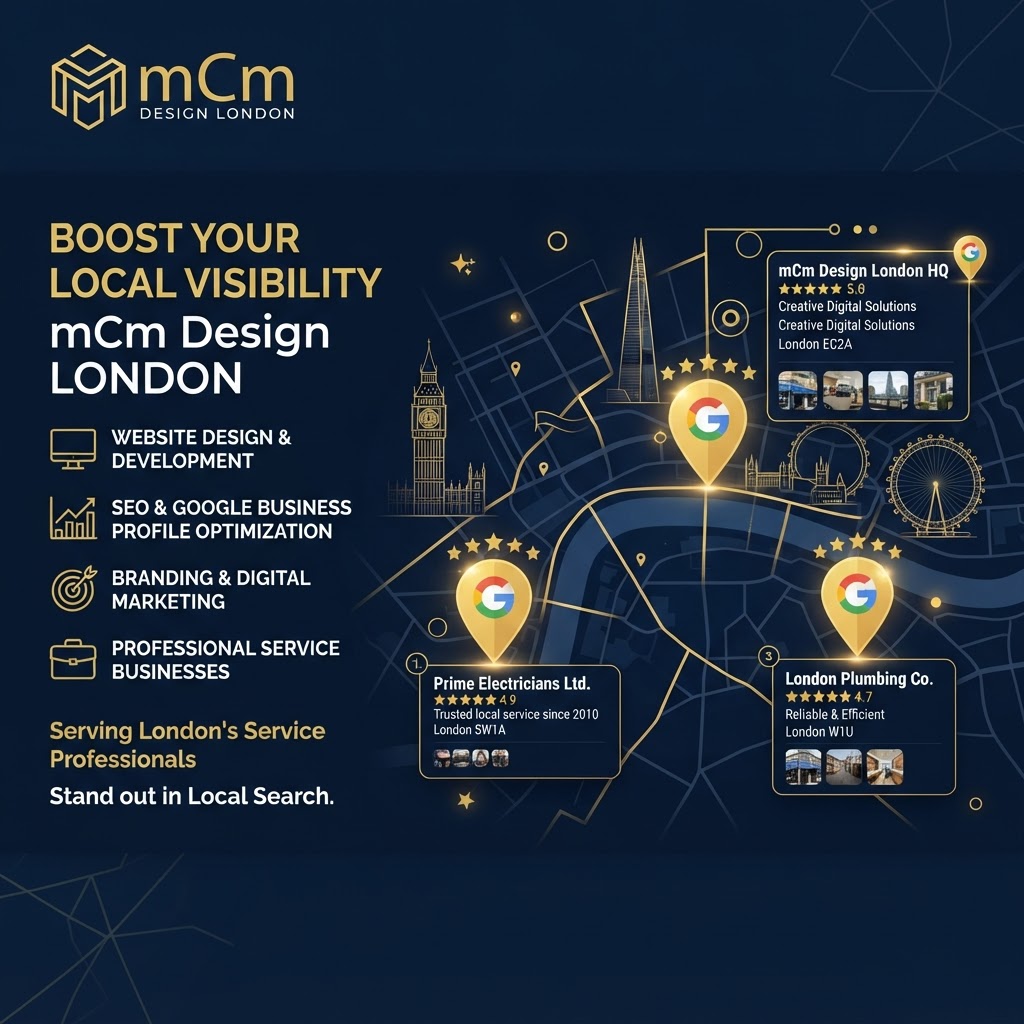
The Local Search Advantage Has Never Been Bigger
In 2026, local search is no longer optional for service businesses—it's survival. When a customer searches for 'plumber near me' or 'dentist in my area,' the businesses that dominate Google Maps and local search results get the calls. Everyone else gets scrolled past.
The good news: local SEO isn't complicated. It's systematic. And if your competitors aren't doing it right, you have a massive opportunity to steal their customers.
Why Local SEO Matters More Than Ever
The numbers are clear:
- 76% of consumers who search for local businesses on their mobile device visit within 24 hours
- 88% of local searches result in a phone call or visit within 48 hours
- Businesses with optimized Google Business Profiles get 50% more call leads
- Local Pack visibility (the top 3 on Google Maps) captures 62% of all click-through traffic
For service businesses, local search isn't a marketing channel—it's the primary source of ready-to-buy customers.
The Foundation: Google Business Profile Optimization
Your Google Business Profile (GBP) is the cornerstone of all local visibility. It appears in Google Maps, local search results, and the Knowledge Panel next to organic search results. Getting it right is non-negotiable.
1. Complete Every Field (No Shortcuts)
Business Name: Use your actual legal business name. Don't keyword-stuff—'John's Plumbing' not 'John's 24/7 Emergency Plumbing Repairs.'
Category: Choose ONE primary category that best represents your core business. Avoid the temptation to list 15 secondary categories. Google prefers focus. A plumber should be 'Plumber,' not 'Plumber + Handyman + Water Damage Restoration.'
Service Area: List every location where you actually service customers. If you cover NG13, NG14, and NG15, add all three. Geographic precision matters.
Phone Number: Use a dedicated business line, not a personal mobile. This signals legitimacy and allows for call tracking.
Website: Link directly to your homepage, not a generic landing page. Make it count.
Business Hours: Update seasonal closures, holidays, and special hours immediately. Outdated hours cost you customers.
2. Photos That Convert (Not Just Look Good)
Google prioritizes GBPs with frequent, fresh photo uploads. The algorithm assumes active, engaged businesses post more.
Upload 10-15 high-quality photos showing:
- Your storefront/office entrance
- Team members at work (builds trust)
- Your workspace and equipment
- Customer testimonial photos (with permission)
- Behind-the-scenes team photos
- Recent project completions
Pro tip: Upload new photos every 2-4 weeks. Fresh content signals an active business and helps you rank higher locally.
3. Service Menu (Often Overlooked, Highly Effective)
Use GBP's Service Menu feature to list 5-8 core services with descriptions. This helps Google understand what you offer and improves relevance for service-specific searches.
A plumber might add:
- Emergency Leak Repairs
- Drain Cleaning & Unclogging
- Boiler Installation & Repair
- Water Pressure Issues
4. Q&A Section (Your FAQ Opportunity)
Answer the questions customers actually ask: 'Do you offer emergency weekend service?' 'What areas do you serve?' 'Do you offer payment plans?' This content improves your relevance for long-tail searches.
5. Posts (Frequent, Relevant Updates)
Post 1-2x per month using GBP's Posts feature. Share seasonal promotions, service tips, new offerings. These posts show up in local search results and boost engagement metrics.
The Multiplier: Local Citations
A local citation is a mention of your business name, address, and phone number (NAP) online—anywhere from Yelp to industry directories to local chamber of commerce listings.
The effect is powerful: inconsistent citations can tank your ranking. Consistent, authoritative citations compound your ranking power.
The Priority Citation Tier (Build These First)
Tier 1 (Non-Negotiable):
- Google Business Profile
- Bing Places for Business
- Apple Maps
- Facebook Business
- Industry-specific listings (e.g., Thumbtack for service trades)
Tier 2 (High Authority):
- Yelp
- TripAdvisor (if applicable)
- Local chamber of commerce
- Better Business Bureau (BBB)
- Industry associations
Tier 3 (Volume Building):
- General business directories (Yellow Pages, Sureswift Capital, Dun & Bradstreet)
- Local business directories for your city/region
- Service-specific platforms
The Non-Negotiable Rule: NAP Consistency
Your business name, address, and phone number must be identical across every citation. Even a minor variation—like '123 Main Street' vs '123 Main St'—confuses Google's algorithm and weakens your authority.
Quick audit: Search your business name on Google. Look at the first 5-10 results. Are your NAP details consistent? If not, you're likely leaving 20-30% of local visibility on the table.
Building Trust: Reviews & Reputation
Google's algorithm strongly correlates review count, rating, and recency with local ranking. This isn't optional—it's critical.
Review Strategy
1. Ask systematically: After every customer interaction, send a simple text or email: 'How was your experience? We'd love a quick review on Google.'
2. Make it frictionless: Include a direct Google review link in your follow-up. Don't ask customers to search for you.
3. Respond to every review: Thank positive reviewers. Address negative reviews professionally and offer to resolve offline. This signals engagement to Google.
4. Aim for frequency, not perfection: 4.6 stars with 50 recent reviews beats 4.9 stars with 5 reviews from 2 years ago.
Target: 2-3 new reviews per week for established businesses, 1-2 per week for newer ones.
The Hidden Lever: Service Area Pages
If you serve multiple cities or postcodes, create dedicated service area pages on your website:
Example structure:
- /plumbing-services-nottingham
- /plumbing-services-arnold
- /plumbing-services-southwell
Each page should:
- Target the specific location + service keyword
- Include local client testimonials
- Mention local landmarks or neighborhood details
- Link back to your GBP
This gives Google explicit signals that you serve these areas, boosting your visibility in hyper-local searches.
Your 30-Day Local SEO Checklist
Week 1: Audit & Foundation
- Claim/verify your Google Business Profile
- Audit NAP consistency across top 10 search results
- List all NAP inconsistencies for correction
Week 2: GBP Optimization
- Complete every GBP field (no empty slots)
- Upload 10-15 high-quality photos
- Add 5-8 services to your Service Menu
- Answer 10 Q&A questions customers might ask
Week 3: Citations & Directories
- Verify/update Yelp and Facebook business listings
- Add listings to Tier 2 directories (BBB, industry-specific)
- Ensure NAP consistency across all listings
Week 4: Reviews & Ongoing
- Set up systematic review requests
- Respond to existing reviews (all of them)
- Plan monthly GBP posts
- Monitor rankings on Google Maps for target keywords
Why Your Competitors Are Losing
Most service businesses treat local SEO as an afterthought. They:
- Let their GBP sit dormant with outdated information
- Have inconsistent NAP across directories (killing their authority)
- Never ask customers for reviews
- Don't monitor their local rankings
You now have everything you need to outrank them.
The Bottom Line
Local SEO isn't complex. It's not expensive. But it does require consistency and attention to detail. The service businesses winning in 2026 are those that treat their Google Business Profile like their most valuable asset—because it is.
Start this week with a GBP audit. Fix the obvious issues. Ask your last 5 customers for reviews. Add 10 photos. In 30 days, you'll see ranking movement. In 90 days, you'll see lead volume increase.
That's how local SEO compounds.
WORK WITH US
Ready to grow your digital presence?
Let's talk about your website, SEO, or AI search strategy.
Get a free consultation →TOPICS