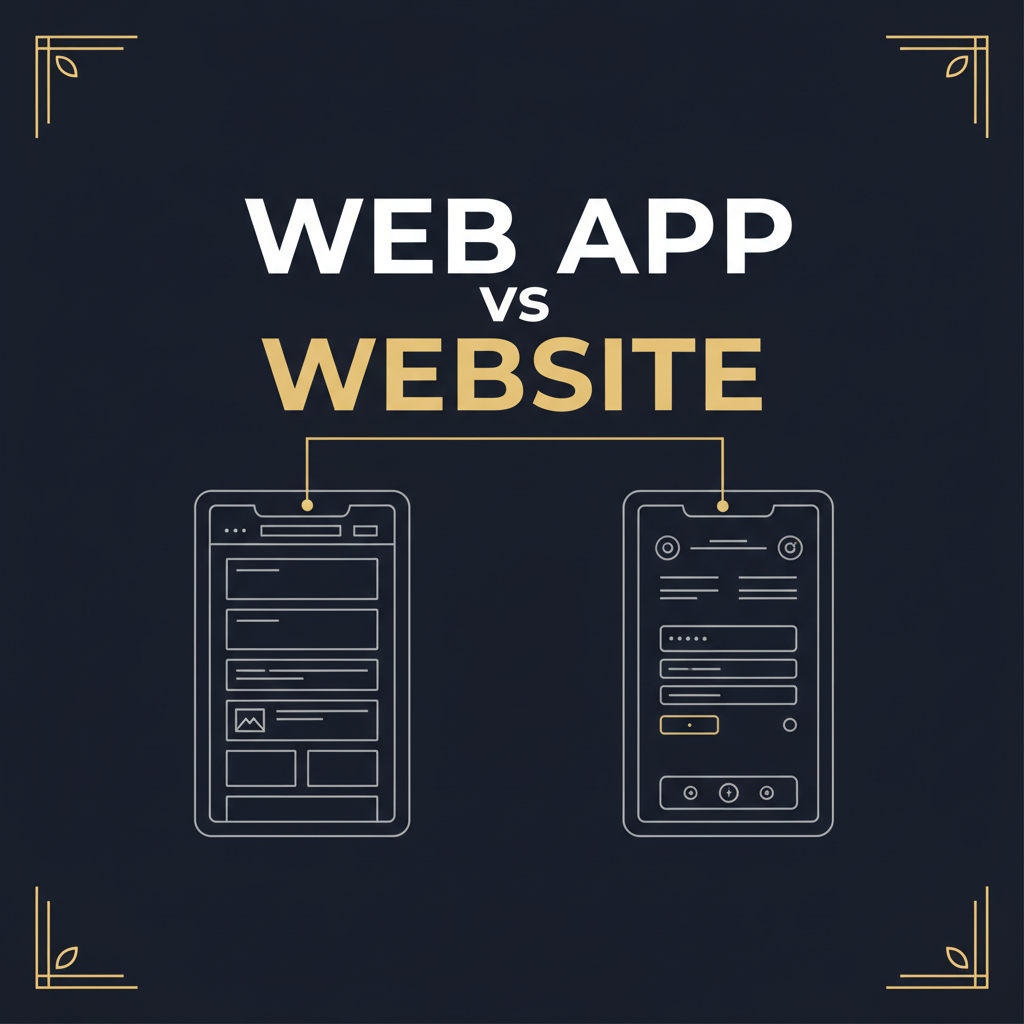
Web App vs Website: Which Do You Actually Need?
The terms "web app" and "website" are often used interchangeably, but they're fundamentally different tools designed for different purposes. For local service businesses deciding how to establish their online presence, understanding this distinction can save you thousands in development costs and ensure you're building exactly what your customers need.
The Core Difference
A website is designed to inform. It's a publishing platform where you share static content—your story, services, testimonials, blog posts, and contact information. Everyone who visits your website sees essentially the same experience.
A web app is designed to interact. It's a digital tool that lets users complete tasks, input data, and experience personalized functionality directly in their browser. Think of it as a mini-application that doesn't require installation.
Websites: Better for Most Local Businesses
If you're a plumber, electrician, dentist, or any local service business, a website is almost certainly what you need.
Websites excel at:
- Building trust through your story and credentials
- Showcasing your portfolio and case studies
- Publishing blog content for SEO and thought leadership
- Collecting leads through contact forms
- Appearing in Google Business Profile and local search
- Ranking for keywords like "plumber near me"
The cost advantage: A quality website costs $2,000–$5,000 to build and $0–$500/month to maintain. Most businesses see ROI within 3–6 months through lead generation.
Web Apps: When Task Execution Matters
A web app becomes valuable when users need to do something repeatedly, not just read something once.
Web apps are ideal for:
- Booking systems (letting customers reserve appointments)
- Client portals (where customers check project status)
- Membership platforms (with user accounts and paywalls)
- Tools and calculators (instant results based on user input)
- Dashboards (real-time data and analytics)
The investment: Web apps typically cost $5,000–$50,000+ to build and require ongoing backend maintenance.
Progressive Web Apps (PWAs): The Hybrid Solution
Progressive Web Apps blur the line between websites and apps. They're websites that behave like apps—they work offline, send notifications, and install on home screens without visiting an app store.
PWAs are particularly useful for:
- Service-based businesses that need appointment booking (website + simple PWA functionality)
- Businesses wanting mobile-app-like experience without app store submission
- Cost-conscious teams wanting app-like features for 40–60% less than native apps
A Real Example
A plumbing business needs: A website to showcase their team, past projects, testimonials, and blog content about common plumbing issues. A simple booking form is fine. → Website is the right choice.
A property manager needs: A portal where tenants can report maintenance issues, track repair progress, and pay rent online. → Web app makes sense.
A local accountant needs: A website to build credibility and attract clients. An optional secure portal where clients upload tax documents and access their tax summaries. → Website + small web app hybrid.
The Decision Framework
Ask yourself three questions:
- Is my primary goal to attract new customers? → Build a website
- Do customers need to return repeatedly to use features? → Consider a web app
- Am I on a tight budget? → Start with a website; add app features later if needed
Why This Matters for Your Business
Many local service businesses waste money building web apps when a great website would convert far more leads. Conversely, some businesses cripple themselves with limited booking functionality when a proper app would streamline operations.
The winning strategy: Start with a professional website optimized for local search and lead capture. Once you're consistently attracting customers, invest in app features (booking, portals, etc.) if they genuinely improve your business operations.
Next Steps
If you're a local service business ready to establish or improve your online presence, start here:
- Audit your current website for lead-generation effectiveness
- Clarify your primary business goal (attract clients vs. manage operations)
- Invest in a website that ranks for local keywords and converts visitors into leads
Need help? That's exactly what we do at mCm Design London. We build websites that work for local service businesses—combining compelling design, local SEO optimization, and proven conversion strategies.
Ready to discuss your online strategy? Book a free consultation today.
WORK WITH US
Ready to grow your digital presence?
Let's talk about your website, SEO, or AI search strategy.
Get a free consultation →TOPICS